



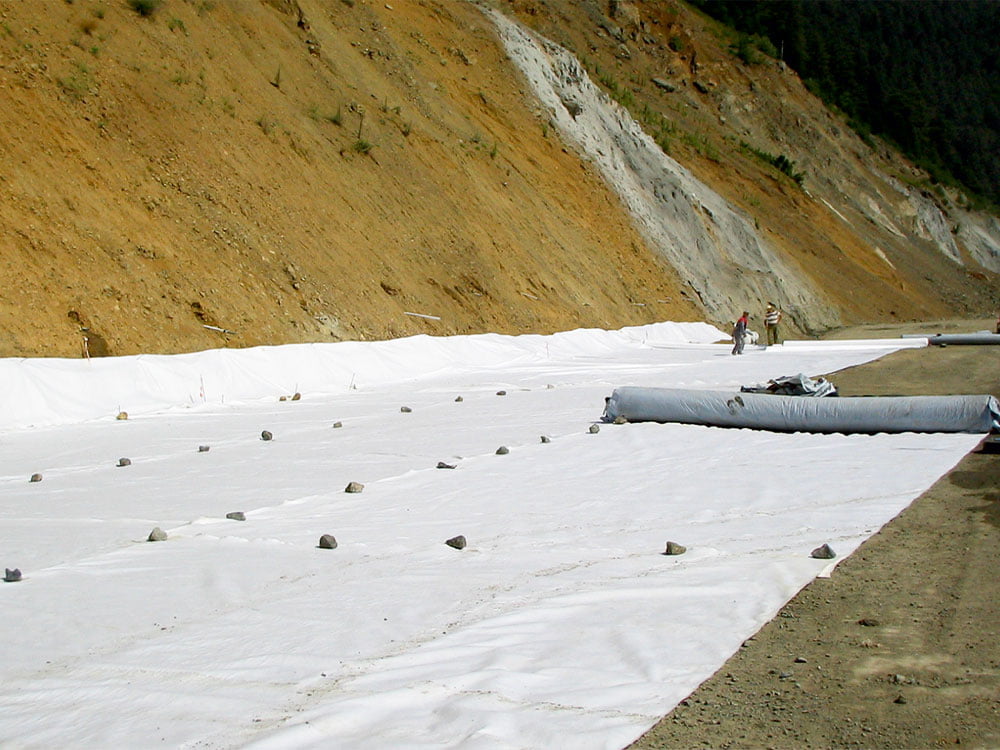
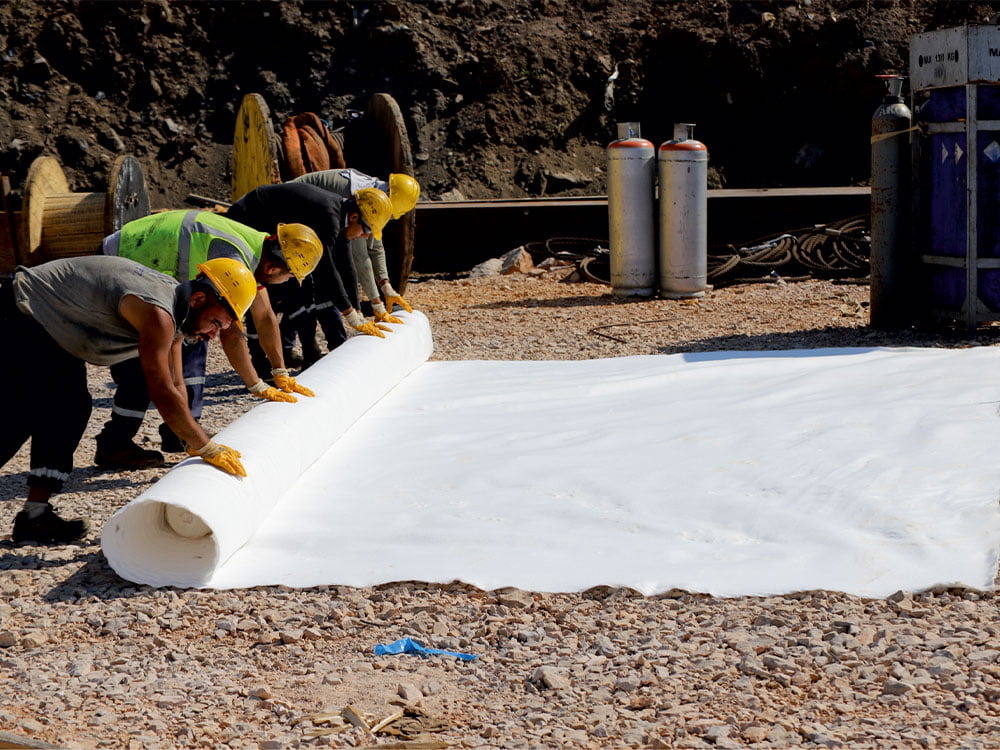

Geotextile is a high-strength geosynthetic material used in soil separation, drainage, filtration, protection, and reinforcement applications. It maintains the balance between the soil and the structure, ensures controlled water flow, and increases ground stability. Geotextile felt is widely used in infrastructure, road, embankment, slope protection, and drainage projects.
Geotextile types offer different properties depending on the raw material used:
 Polypropylene Geotextile (PP Geotextile): Its lightweight structure, high chemical resistance, and excellent water permeability make it preferred in drainage and filtration applications. Polypropylene geotextile is a long-lasting and cost-effective solution.
 Polyester Geotextile (PS Geotextile): It stands out in soil reinforcement and separation projects with its high tensile strength and low elongation rate. Polyester geotextiles are resistant to deformation even under heavy loads thanks to their durability.
 Recycled (PS-R) Polyester Geotextile: Offers an environmentally friendly alternative. Made from recycled polyester fibers, this type of geotextile is both an economical and ecological solution for sustainable infrastructure projects.
Geotextile felt products are produced in nonwoven form and are effectively used in roads, railways, dams, ponds, tunnels, landscaping, and drainage systems. Durable, permeable, and long-lasting, polypropylene geotextile, polyester geotextile, and recycled polyester geotextile products are essential components of modern engineering projects.
Increase soil stabilization, optimize water management, and create environmentally friendly and safe infrastructure with geotextile solutions tailored to your project needs.