



EPDM Membrane
EPDM Geomembrane is a highly flexible elastomeric polymer created by synthesizing ethylene, propylene, and a very small amount of diene monomer, followed by the addition of carbon and the processing of various oils and binders.
EPDM maintains its physical properties for many years.
Rubber is produced from an EPDM-based synthetic elastomer. It has superior resistance to UV rays and ozone compared to its counterparts. It retains its properties even in sudden temperature fluctuations between -40°C and +120°C.
EPDM Geomembrane Application and Usage Areas
Geofen EPDM Geomembrane is applied by joining strips on roofs or terraces, or by laying pre-assembled or prepared EPDM Geomembrane in panels, according to the dimensions of the surface to be insulated.
It is used in the following areas.
- Building foundations
- Basements
- Roofs – Terraces
- Swimming pools and production pools
- Dam bodies
- Ponds – Water tanks
- Water reservoirs – Irrigation channels
- Waste storage areas
- Irrigation channels
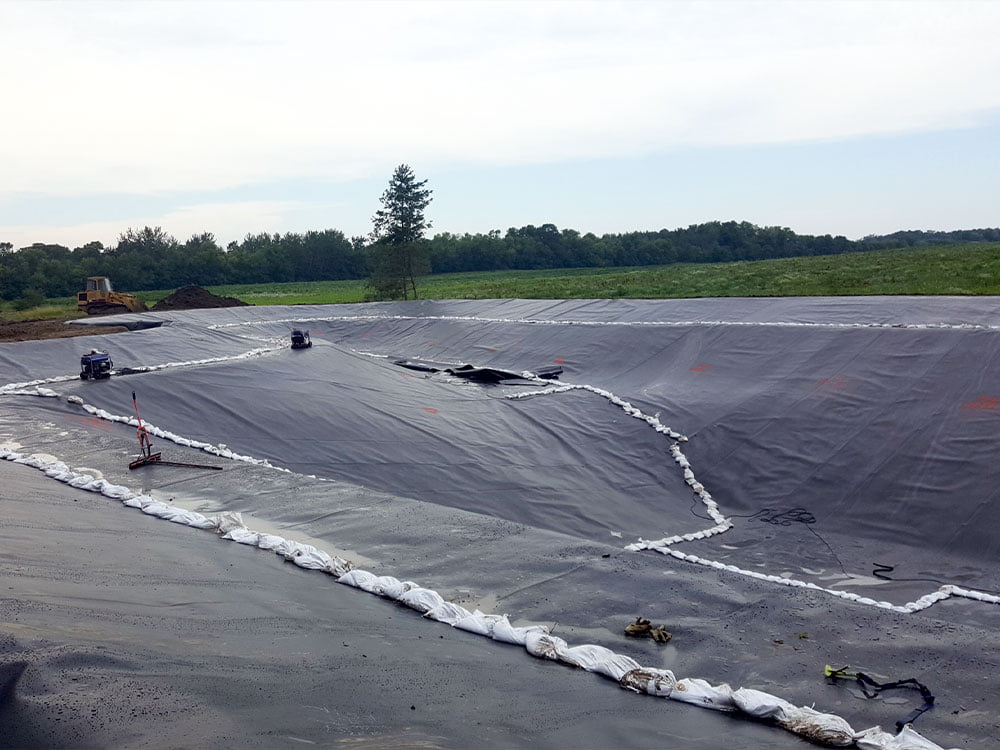
- Long service life thanks to its special resin containing antioxidants and carbon black.
- High strength and elongation properties.
- Resistant to chemical effects.
- Provides high UV resistance due to carbon black content.
- The special welding method allows air pressure channel, shear, and peel tests at the seams.
- Large roll dimensions enable fast and practical installation in large-area projects.
- Products with single- or double-sided textured surfaces allow application even on steep slopes.
- Lower-density materials (LLDPE, VLDPE) can also be produced for different application requirements.
Materials are supplied in rolls with widths of 1.6–2.1 m and lengths of 20–25 m.
Materials should be stored on a flat surface and in a covered area. Stored products must be kept away from direct sunlight, heat, and ignition sources.
If EPDM geomembrane cover rolls need to be stored outdoors for a long period, they should be covered to protect them from sunlight.